Tina Ferguson-Riffe, Smoke Berkeley

Thanks to Opportunity Fund for this story.

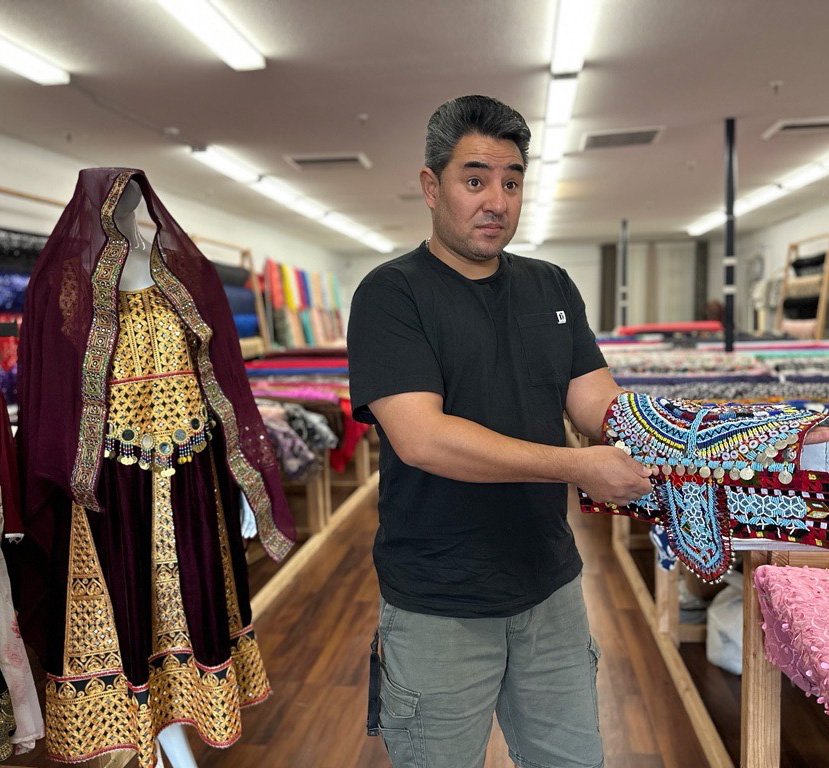
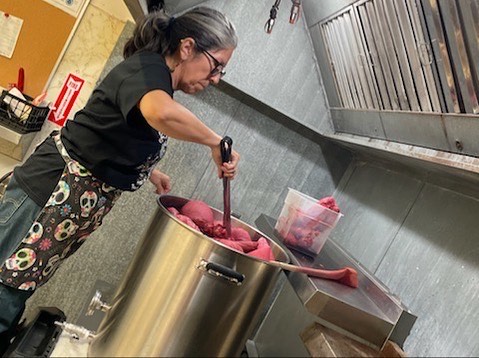
Born and raised in Texas, Chef Tina Ferguson-Riffe tapped a unique source of “start-up” funding to get her BBQ restaurant—Smoke Berkeley—off the ground.

OppFund Tina“I got a call out of the blue. It turned out my father had owned some water rights in Texas, and twenty years after he passed away they tracked me down. I sold them and used the money to help start this business. So it’s almost like this restaurant is a gift from my daddy, twenty years in the making,” said Tina.

Tina had been out of work for three years before opening Smoke Berkeley. Previously employed as a head chef, in 2008 she was laid off when the recession hit.

“I started this business because I wanted a job. I’m 62 years old. It’s hard to get work at my age. I was making really good money and then the market crashed. I couldn’t get anyone to give me a chance,” said Tina.

Tina opened Smoke Berkeley’s doors in October 2011 with the goal of cooking the kind of food she grew up eating, made with fresh, local ingredients. She’s also committed to hiring staff from employment training programs, like The Bread Project. But despite garnering rave reviews, the restaurant needed additional financing to become more profitable.

Opportunity Fund gave Smoke Berkeley a $20,000 loan.

“We used the loan to buy equipment for the restaurant. We wanted to make it run better and cook more food, just to increase the volume of our revenue. And oh yeah, we have definitely seen an increase!” said Tina.

Now that the summer months are coming, Tina and her staff of seven employees are looking forward to watching Smoke Berkeley grow. Barbecue cuisine is a seasonal business. As Tina explains, “We thrive in sunshine and wither in the rain.” Fortunately for her, Opportunity Fund has a one-of-a-kind loan for small businesses just like Smoke, unique in the U.S. microlending industry. Tina received Opportunity Fund’s EasyPay loan, which is repaid when her credit card processor takes a small percentage of daily credit card transactions as repayment. With EasyPay, she pays back the loan bit by bit every day as sales ebb and flow, rather than in a fixed monthly payment that can be too big in the lean months.

“My business has grown so much. I don’t know what my options would have been without Opportunity Fund.”

Verity Somers, Raw Workouts

Verity Somers, founder of Raw Workouts, a blonde woman wearing workout clothes and standing next to a large mirrorThis Success Story comes from Women’s Economic Ventures. You can find out more about Verity Somers and Raw Workouts here.

What prompted you to start your business?

When I graduated from UCSB, I was determined to find a job that allowed me to help people keep and/or restore their most valuable possession: their health. I was hired at a local, corporate-owned gym, which helped me gain a strong client-base. I began to truly gain an understanding of why people exercise, what motivates these people, and more importantly, what causes them to stop, and/or plateau. Part of the issue, I believed, was the lack of personalized workouts provided by underpaid, uninterested corporate trainers. I wanted to cater to each of my clients in specific and individualized ways, the way, I feel, personal training should be… So I started my own business.

What role did WEV play in the opening of your business?

Had it not been for WEV’s program and all the help they provided in my journey to fly solo, I never would have even tried. My sister encouraged me to take the course after she’d been through it herself. I was reluctant simply because the thought of owning my own business just seemed unfathomable. However, the course, the accountability it provided, the instructors, the guest speakers, and my classmates (who were just as scared as I was) were exactly what I needed to gain the courage to move forward with my goals. I still reference my HUGE WEV binder crammed full of information to continually expand my business.

What specific goals have you set and achieved as a business owner, and what goals will you conquer next?

I had several specific goals when I began. One, was to double the number of clients I train through advertisements and marketing strategies I learned at WEV and to provide each of these clients with the best programs designed to achieve their optimal health. The most important thing, however, was the goal to run my business with integrity. Above all else, I wanted to provide a service that anyone could enjoy. I wanted to set specific price points that made personal training affordable. Lastly, I wanted people to hire me because they trusted me fully and understood that I cared deeply about their goals, their insecurities, and their overall health. I’m proud to have achieved all of these goals, and more. Next, I envision cutting a red ribbon at the grand opening of my very own wellness center.

How have YOU helped WEV, as well as list other WEV clients you’ve worked with?

I’ve come back to WEV as a guest speaker several times. I promote current and potential clients of WEV to pursue their dreams, especially the clients who voice the same reluctance I once had regarding business ownership. The WEV community has also been an amazing resource for networking. WEV graduate, Cory Pironti of Dandyline Designs designed my entire website. Vinit Satyavrata, of Pure Light Photography has shot all Raw Workouts advertisement photos. My good friend Angela Burton, of KeyTC Solutions has helped counsel me through stressful moments of business ownership…(I never said I didn’t have an occasional meltdown!)

What advice do you offer others who might want to start their own business?

Do it. Just like exercise and dieting… no excuses. Just do it. At a powerlifting seminar I attended earlier this year, Dave Tate, owner of Elite FTS, gave me one of the best pieces of advice I’d ever heard. He said, when it comes to owning a business in which you’re up against A LOT of competition, just be you. Have integrity. Care. Be nice to people. Be honest. The rest will follow… provided, of course, you work your ass off.

Skincare by Feleciai

Feleciai Favroth
Skincare by Feleciai – The Art of Bathing

(Scroll to the bottom for a video of Feleciai displaying her products!)

Feleciai Favroth was always destined to be an entrepreneur. Many members of her family including her mother Pearl and sisters, Daphne and Cheryl have followed a path to owning their own businesses. Her mother always loved providing quality housing and purchased rental properties while still working for Lockheed Missile & Space on their assembly line. Daphne, Board Certified in pediatrics and internal medicine opened a successful practice several years ago while Cheryl is an aspiring stand-up comedienne and promoter.

Prior to launching Skincare by Feleciai in 2008 she had a varied professional past life. Upon graduating from the University of Pennsylvania in 1993 she spent 4+ years in corporate America doing brand management and promotions. Never feeling fulfilled because she was not following her passion for beauty she left New York where she was living at the time working for Brown Foreman Beverages and went to the Vidal Sassoon Hair Academy in Santa Monica to study cosmetology. Though being a Hair Stylist was vastly different than brand management she thoroughly enjoyed her new lifestyle and profession. Returning to the San Francisco Bay Area upon graduation she joined the salon Architect & Heroes as a hair stylist in training.

At the time, real estate – especially in California – was heating up. Though she loved being a stylist, she came from a family that had operated rental properties since 1973 and the call to get involved in the housing industry was too strong to ignore. She left the hair industry in 2002 and became a Real Estate Broker. Working for Coldwell Banker and then finally opening her own company Next Level Real Estate Company in 2004 she worked as a Broker helping families purchase homes in the Bay Area. Even though helping individuals realize the American Dream, she always had a passion for beauty. Turning 40, she knew if she did not follow her passion for beauty now, she may never do so, and so she began the journey of developing the right opportunity for her.

She started her journey at Women’s Initiative for Self-Employment with the idea of opening a beauty salon. Four women in her class had the exact same idea, so she decided to continue looking for an opportunity where she could really differentiate herself. In 2006, she took the 14-week Business Planning Class with Paul Terry at the Renaissance Center for Entrepreneurship. At that time she planned to start an image consulting business, and even won their business plan contest with that idea. As she began the process of building an image consulting business, she found it did not fully fulfill her passion.

In 2007, she realized that making products that help people look and feel their best was what she wanted to build her business upon. Also, she realized that offering a product would allow her to follow her dream of celebrating diversity in beauty by offering products that work on many types of skin. She took classes on how to make natural bath and body products at The Nova Studios, a place that draws people from all over the world, because she wanted to learn from the best. Over the next few years, she took classes on essential oils, soap making, skin cream making, etc.; she took almost every class the studio offered.

During this time she still continued to work as a Real Estate Broker. As she made more and more soaps, lotions, scrubs and other products, she spent more time doing that and less time selling houses. In December 2010, the time came to renew her broker license; she decided it was time to leave the real estate market behind. It took her three years to get to the point where she could follow her dream full-time.

In August 2010, when the soap business became more serious, she decided to reboot professionally and immerse herself in the soap and entrepreneurship world. She was approached by the founder of Centro Community Partners Arturo Noriega. She didn’t need the basics, but was looking for a professional support network that knew her only as a beauty products entrepreneur. She told Arturo, “I have completed a lot of classes and already have my degrees. I am looking for an effective support system that is not going to waste time rehashing the basics of business. I don’t have a lot of time to waste.”

She took Centro’s business planning class in August 2010, pushing her to focus on her professional development and creating a fundable business plan with sound financial projections. In April 2011 she received a $7,500 loan from the Oakland Business Development Center at 7% interest and a 3-year repayment. Taking the class was a requirement to getting the micro loan. Centro now works with various alternative lenders, including Kiva, which recently launched a new program called Kiva Zip. Earlier this year, as she was looking to further grow her business, Centro endorsed Feleciai on Kiva Zip for a one-year interest-free loan. She still consults with Arturo and his business partner Naldo Peliks on a regular basis for professional and personal support.

Business has been really good for Skincare by Feleciai. From 2010-2011, her business tripled; from 2011-2012, it is on plan to at least double. If everything goes as planned her business should be profitable by the end of 2012. In 2013 she plans to continue growing her business by focusing on social media, Internet sales and, most importantly, growing the number of wholesale clients. To support this growth she is looking for a bigger space for production, to host potential buyers and retail products. She’s physically maxed out her production studio at HIVE, an artists’ collective in Oakland. The plan is also to hire at least one part-timer to assist with production and marketing.

Feleciai is extremely happy now that she is able to follow her dream of celebrating diversity in beauty and making the world a better place one “soft skin” at a time.

Gulsum Rustemoglu, GEPermit

Gulsum Rustemoglu,
Global Environmental Permitting

Thanks to Accion San Diego for this success story.

Gulsum Rustemoglu, founder of GEPermit

After losing her job as an environmental consultant for a large environmental planning firm, Gulsum Rustemoglu decided to become her own boss and founded Global Environmental Permitting (GEPermit) in July 2009.

GEPermit is a woman-owned micro business specializing in environmental permitting and compliance throughout the U.S.  New development projects must secure certain permits in order to ensure that all environmental protection laws are being followed. Laws vary from state-to-state and are often very complicated and confusing. GEPermit helps developers, governments, and communities work together to create new development projects that make a limited environmental impact.

Gulsum began GEPermit from her home office and experienced early success, but felt that capital limitations were preventing the company’s growth. Not being able to secure financing through traditional means, she received a $15,000 microloan from ACCION San Diego that enabled her to move from a home office to a space in Murphy Canyon, and to add seven part-time employees and interns to her staff.

“The biggest challenge of being a business owner is that I am responsible for all aspects of the business,” Gulsum shared with Accion.  Before receiving her microloan, Gulsum not only had to fulfill client requests, but also had to manage all accounting, taxes, and marketing for the business. Hiring additional staff has given GEPermit the margin they need to creatively expand their business, and freed Gulsum to pursue personal interests including a planned half-marathon across the Bosphorus Bridge in her hometown of Istanbul.

On a related note, help other entrepreneurs like Gulsum who lost their corporate job and want to create their own job and be their own boss – sign CAMEO’s Be Your Own Boss petition today!

John Falcon, Falcon Builders

Micro-business Owner
Falcon Builders and Developers, Inc
Fresno, CA

John Falcon, Falcon Builders and Developers, Inc., FresnoJohn Falcon spent 20 years and 6 months in the Air Force. While stationed in Las Vegas in the mid-1990’s, John and his wife Marina fixed up old houses. They took on three rehab projects on low income, section 8 housing. Providing safe homes to code to less fortunate families gave them great pride.

John’s Air Force experience included 10 years as a pavements maintenance specialist and equipment operator and 10 years in project management. He was deployed all over the world on humanitarian assignments that included hospital and school remodels in Haiti and new school construction in French Guyana. And for business know-how, he attended SBA training programs during his last assignment at Pope AFB. The Air Force clearly trained him to manage construction projects. So the move to federal construction contracting was a logical next step.

Using the GI Bill, he went back to school and graduated summa cum laude with a Bachelors of Business Administration in Management just before retiring from the Air Force in 2007.

He launched Falcon Builders and Developers, Inc. in 2007 with his wife and partner, Marina. Early on, John saw the potential in the lucrative (but incredibly competitive) arena of government contracting and decided to capitalize on the different designations his business qualified for as a disabled veteran owned business. John found the Central Valley Business Incubator/Small Business Development Center, whose Rich Mostert counseled John and provided technical assistance regarding certifications for government procurement. John attended every training session and networking event and built relationships with contracting officers.

Starting a business wasn’t easy, it took him seven months to get his first contract, which was a VA project and he “hasn’t looked back.” Because John developed a unique niche, his construction company weathered the recent economic crisis. Falcon Builders currently employs 10 people. Most recently he returned to CVBI/SBDC for a review of his five year strategic growth plan. The company has maintained revenue streams and is well positioned for future opportunities; and John is known as the “go-to” person on government contracting issues and is a leader in his local Disabled Veteran’s organization. Rich successfully nominated the company for the Regional Veteran-owned Business of the Year, an award that Falcon Builders now displays on the office wall.

Jessica Nowlan, Hope Solutions

Thanks to Women’s Initiative for this story.

Jessica Nowlan
Founder of Hope Solutions

Jessica Nowlan really knows how to bootstrap. Starting when she was just 13, Jessica was on her own. She has lived through periods of homelessness, group homes, and struggled to raise two kids as a single mother. But when Jessica was 16, she was given an opportunity that changed her life. She was hired out of juvenile hall as an outreach worker for the Center for Young Women’s Development. When she left the organization seven years later, Jessica was the Interim Executive Director. Jessica found out about the Women’s Initiative when she started working as a domestic violence counselor at Stand Against Domestic Violence. To empower her clients, she started showing them Women’s Initiative success story videos. When funding for her position was cut, Jessica decided to take a chance and sign up for the Women’s Initiative business training program, even though it meant hardship because she would have to forgo Welfare to Work public assistance during this difficult transition. “I thought, so I don’t have a college degree, but I am definitely untapped talent.”

Jessica’s dream was to build a company that would provide high-paying career track jobs for people like her, looking to pull themselves and their families out of poverty. She had observed first-hand that they wouldn’t find these kinds of opportunities through traditional workforce development programs. During her days working as a payments processing sales agent, Jessica had also learned that many large banks use predatory practices that take advantage of small business owners. To put a stop to predatory practices and provide quality jobs, Jessica decided to start her own triple-bottom-line company. In 2010, Jessica founded Hope Solutions. Her company offers integrated payment technology and marketing services in Oakland and the Bay Area and now employs five people. “Hope Solutions provides small business owners the information they deserve and offers high-paying, career track positions in the payments processing industry to our employees; you don’t need to have graduated from college to deserve the opportunity to get ahead,” says Jessica.

I can definitely say that I am proud of myself. I am proud that I have gone against the grain in a male-dominated industry that is normally only about the bottom line and created a company with a social mission that advocates for small business owners.” Hope Solutions is currently working on a major initiative in collaboration with Oakland Grown to promote purchasing from local businesses, including several Women’s Initiative graduate businesses. Hope Solutions has also given back to Women’s Initiative graduates by providing free trainings on how to avoid predatory payment processing practices. Jessica found the personal support from the other women entrepreneurs in her class and the networking opportunities provided by SuccessLink to be integral to her success. “I look at every person I meet as a networking opportunity now, maybe they have a helpful idea, or contact, or just know something you don’t know – if you walk in the world that way, it can really open up doors.”

On the rewards of starting her own business, Jessica says “I still have financial anxiety, but now I know that if the car breaks down, or the kids need new shoes, it isn’t going to break the bank, there’s a light at the end of the tunnel now. Since starting my own business, my confidence has gone way up. I find myself in rooms with people from top universities and firms, and it feels so good to be the one looked to for advice.” Jessica anticipates rapid growth in her business over the next two years in the Bay Area and plans to bring Hope Solutions national in the future.

Mariposa Valley Farm

Vonita Murray had a normal early adult life. She went to college, received a BA in photography with a minor in business, served in the 1st Gulf War and went to work. She spent over ten years in some form of Administrative/Office Management before becoming a CAD Technician. She was working at an architecture firm, when she was laid off in 2009.

“I had had enough of doing what other people told me to do with only the reward of a paycheck. AND I was sick of having a desk job. I have always been an active outdoors-loving woman and having to spend 8+ hours a day in front of a computer was making me miserable.”

Owner of a micro-business farm, Vonita MurrayThe epiphany she had after being laid off coupled with her desire to bring people good food led her to pursue edible landscaping. She soon realized that deep down she really wanted to be a farmer and took her passion one step further.

Farming/gardening is in her blood. Vonita’s grandfather was a farmer in Minnesota with a 1,000+ acres of corn, soy hogs and chickens. She grew up in Colorado on a three-acre lot. Her family always had a huge garden and lots of animals around like chickens, turkeys, and a horse. She has a green thumb, loves being outside and has never been afraid of hard work.

In January of 2011, she became a farmer. She leased four acres of land on which she grows a variety of vegetables, fruits and flowers, including green cauliflower, yellow strawberries and purple carrots. She wants to diversify and grow as many different crops as she can manage. She operates an 8-member small Community Supported Agriculture from her farm and has plans to grow it to 50 members. She sells her produce at the local farmers market and is developing restaurant accounts.

Even though Vonita studied business and farming is in her blood, she doesn’t have a formal education in farming. Every day presents a new challenge. She is learning the ins and outs of large scale crop production, succession planting and crop rotation. She is also learning the business side of farming including business planning, marketing, packaging, and direct sales through the Farmers Market and her CSA.

She is a quick learner and not afraid to ask questions. She started with the local office of the National Center for Appropriate Technology (NCAT), who provides technical information and resources for farmers. Then in April 2011, a few months after starting her farm, she saw a sign for Farmer Veterans Coalition (FVC) on one of her visits. They are headquartered in Davis, 15 minutes away from where she lives; so she drove to their office. She figured that because they are dedicated to helping vets and she was taking on a career in which she knew nothing, she had nothing to lose. She is glad she called.

“FVC helped me with all of their awesomeness,” said Vonita. ‘Awesomeness’ translates into research and information, volunteers and hard resources.

To help her with her farming and business challenges, FVC sent her several books, including one of crop rotation and the new organic grower, as well as information on chicken production and mushroom cultivation. Her relationship with FVC has gotten down and dirty, literally. On five separate occasions veteran volunteers from FVC (and the veterans from UC Davis) have worked on her farm. They started building a 1000 square foot hoop house (greenhouse), weeded fields, built her pallet compost area, planted starts, laid plastic mulch, ran irrigation and planted the start of a hedgerow. And FVC arranged donations from Home Depot to purchase much needed supplies and Vonita received a $5,000 fellowship grant that bought her the hoop house and compost fertilizer and irrigation supplied. The relationship is ongoing.

Her first year in business has been “awesome, one big expensive education in farming.” The number one thing that she has learned is that planning and paying attention to detail, are the keys to success. Her business is growing slowly and she doesn’t plan to hire anyone else until 2013.

Vonita also is deeply involved in her community. She is working with the agriculture professor at Woodland’s new Polytechnic Charter High School to devise a curriculum in which students will take what they learn in the classroom and apply it to the field. In other words, the farm will become their outdoor laboratory. Part of her long-term plan is to give back to those who have helped her by hiring fellow veterans.

“I am designing Mariposa Valley Farm to be a center of activity, where my community can come and learn what it feels like to be intimately involved with nature. Where their children can break away from their televisions, hold a tiny seed in their hands and experience the wonder of watching that tiny seed grow into the food they eat. Where I have the honor of teaching my community what I have learned along the way. And where my community, on the farm and off, grows and becomes richer.”

Visit Mariposa Valley Farm on the web for gorgeous photos of the farm.

Jessicurl

The story of how Jessicurl was born is best told by its owner, Jessica McGuinty.

Until the time I was 14 I had thick yet fairly straight hair. When puberty struck, my hair grew more and more coarse and eventually started to curl. I was mortified and at a total loss for how to deal with it. The only advice my straight haired mother could offer was “Go brush your hair!” , which is the WORST thing to do to curly hair! My dad was more sympathetic, as he’s the one who gave me the curls, but his motto was “bigger is better.” To a self-conscious 14 year-old who didn’t want to stand out, that wasn’t very helpful either.

As my hair grew bigger and bigger, my peers grew meaner and meaner, calling me such names as Mushroom Head…. As I grew up, my hatred of my hair didn’t dissipate. Finally in 2002 I figured there had to be a better way, and typed “curly hair” into Google to see what the internet had to offer.

The first thing that came up was naturallycurly.com – an entire community of curly haired people who shared the same struggles as I did! Who knew??

I immersed myself in their Curl Talk message board and quickly traded hair tips and horror stories. Much of what my cyber-friends talked about, however, were products. I bought any product that someone raved about, most of which didn’t do anything to make me like my hair better. Many of them actually made my hair worse, drying it out with alcohols and stripping the natural oils with harsh detergents.

One day I came across a very basic recipe for a hair gel made out of flax seeds. I remember thinking, “Wow, how cool would it be if I could make my OWN hair gel? I sure would save a lot of money!” I tried it, and the results were less than stellar. But this time I was inspired, , so I tweaked the recipe, by adding other natural ingredients that I had learned are good for curly hair. The results were nothing short of miraculous. I was shocked that FINALLY my hair looked like I wanted, and I had made the product on my stove!!

With much exuberance, I went back to the NaturallyCurly.com message boards and excitedly shared the recipe with my new found friends. After posting my recipe I was flooded with emails from curly headed members asking if they could just buy some of the magic potion from me, as they really didn’t feel like making it.

It was September 2002 and Rockin’ Ringlets Styling Potion was born. She decided not to launch with one product, so she developed Gelebration Spray and Awe Inspiraling Spray. Over the course of the first year, she heard from her customers “I love styling products, but need a conditioner.” So within six months she launched a conditioner. By the end of her first year, she had three conditioners, a shampoo and the styling products. All this innovation and production was being run out of her 600 square foot apartment in Berkeley.

She knew she needed more space. She also wanted to pay her employees a living wage. She knew that wasn’t going to happen in the Bay Area.

Jessica’s cousin, Cathleen went to Dell’Arte International, a performing arts school in Humboldt County to become a clown. The two were close, so Jessica visited Humboldt often while in high school. She loved it. By the time she was 20, she knew she wanted to move to Humboldt. At the time, waitressing was the only job option in Humboldt and that’s not what she wanted to do, so she moved to the Bay Area.

So when Jess decided to expand, she thought, “what the hell, let’s go to Humboldt.” She liked the lower cost of living, the trees and the people. She had no idea how much community support for small business existed. She didn’t know about Northcoast SBDC. She found them through a basic google search for “moving your business to Humboldt.”

When she went to look for a place to live, she also visited the SBDC. One of the first people she met in Humboldt was someone at the SBDC. A year after she started her business, she moved north.
Initially, Jessicurl was run out of the Humboldt kitchen. In June 2004, the company moved to its first factory. The company was way under-capitalized – the credit cards paid for the move. The SBDC helped her write business plan so she could get a loan from Arcata Economic Development Corporation to buy equipment.

Jess says that the available business resources are “mind-blowing” and the SBDC has been a big part of her success.

Jessicurl began marketing all over the world, obtained financing, expanded production, and grew a solid and loyal customer base. A 2006 appearance on Rachel Ray’s show to give curly hair tips helped to spread the word about Jessicurl. Throughout the expansion and growth, Jessicurl faced additional challenges that many growing businesses face – international trade, quality control, calculating cost of goods sold, tax implications, marketing, human resources, and financing/capital. She also sought to devise a growth strategy to capture market share, to pay for her increasing overhead and to finance her rapid expansion without imploding.

Jess turned to the North Coast SBDC again and its advisors and one in particular Stilson Snow. Jess would arrive at his office with a crisis and start to cry. She calls Stilson her business therapist. He has talked her down from the ledge when things were difficult. Stilson coached the company on cash flow and on understanding their costs. He arranged for additional SBDC expertise to be brought to bear on issues such as managing people, quality control, and financial strategies such as raising capital.

Recent planning has focused on how to play to Jess’ likeability and strength in marketing while bringing in other talent to handle other things. Most recently, Jess took on a partner and Stilson helped her with the whole process.

In 2007, Jess joined the board of directors of the North Coast Small Business Resource Center, the host of the SBDC program in Humboldt and Del Norte Counties. She likens her participation to the Hair Club for Men: “I’m not just on the board; I’m a client!”

“We wouldn’t have gotten nearly this far if we hadn’t taken advantage of what the SBDC has to offer,” said Jess. “We needed so much to work on the day to day stuff. It wasn’t just the direct services provided, either. It was the extent to which SBDC staff reached out on our behalf. It was amazing.”

During the first years in business, Jessicurl’s sales increased by 450% and she now employs six people full-time and two part-time. She grew a healthly 20% in 2010.

“Through the years I’ve met thousands of curlies… and it’s always inspiring to hear how similar our struggles are,” says Jessica. “The path to loving our curls is not easy, but many of us have made it and many are in the process. I’m honored to be a part of that journey. You have the right to remain curly.”

William Ortiz

Success story from Mission Economic Development Agency in San Francisco.

William Ortiz, owner of Gentle Parking produced by medasf on Vimeo.

Semper Fi Security

Jason T. grew up in a small town in Northern California. He did well in high school, after which, he decided to join the U.S. Marine Corp. He served from 1991-97 through multiple tours in Desert Hope, Desert Shield and Desert Storm and received an Honorable Discharge and earned more than a dozen medals.

Jason expected that his attention-to-detail, discipline, strong work ethic and management skills that he developed in the Marine Corp would make him a sought-after candidate. Instead he found that companies and society did not look favorably upon the first Gulf War or the service men and women involved. When Marines receive an employee handbook, they follow it and perform really well, sometimes to the chagrin of their peers. Much to his surprise, people thought he worked ‘too-hard,’ either because they didn’t understand or they suspected he had ulterior-motives. He found they would do the bare minimum of acceptable work.

Since leaving the Corps, some of the retail jobs in Southern California included:

  • Jason managed ground reclamation, or clean up after a gas station closes. He managed $70 million in accounts for a year and a half until his division shut down.
  • Jason became the first male Victoria Secrets salesman at Southcoast Plaza. He broke every sales record in ten months. Men trusted him with their credit cards and gave their girlfriends a $500 limit a month. Women would put on corsets, model for him and ask if their boyfriends would approve. But Jason wasn’t promoted. He believes his manager liked the bonuses she received off his sales and the BMW she bought during his tenure.

He finally thought he found his niche at a boating company that sold kayaks. Jason was a combat water specialist in the Marines and used Klepper kayaks to mark mines so the larger ships could sail. (Kleppers are wooden foldable kayaks used by the military because they don’t set off mines.) Jason created a retail arm called ‘boats in bags’ and increased sales from $365,000 to $2.5 million in 4 years. He was underpaid and didn’t have benefits, but the owner led him to believe that he would sell company for sweat equity – Jason’s 80-hour work weeks. Jason thought that he was building a future for his family, but when he returned from a vacation, there was termination notice waiting for him.

Frustrated, he and his wife Cassandra talked about why he was good at his job and what he wanted to do with his life. Cassandra realized Jason had entrepreneurship in his blood when he increased kayak sales sevenfold. He spent most of his youth renovating his mom’s bed and breakfast. He is good with hands and was the one who decorated entire apartment.

He decided to study interior architectural design. He finished a three year curriculum in two years. He graduated with high honors, an AS in architectural interior design, an AA in liberal arts, an AutoCad certificate and a marketing certificate. He was impassioned about what he learned – environmental and universal design – designing for the entire life of the product and user, like cost effective materials that weren’t toxic and special considerations for people with disabilities.

He graduated in 2009 at the height of the economic recession when there were no positions available. He thought about starting his own firm, but wasn’t quite sure where to start and was worried about carrying his financial weight in his family.

In the summer of 2010, his wife who runs the entrepreneurship training program at Goodwill of Orange County said “you’re going to work for yourself. Take our Future Business Owners class and work on the business plan for ‘Designs Done Right.’ The 15-week course provided valuable information about starting a business. Each class had a guest speaker that was a teacher and a networking resource.

Around the same time, Jason joined the American Legion to reconnect with his military life. One day the American Legion leaders were complaining about parking issues, checking id’s and other security issues. Volunteers were supposed to be on the job, but they would get drinks or wouldn’t show up. Jason chimed in, “We’re vets, we know how to guard a gate.” He had been bitten by the entrepreneurial bug. With the help of his class, he developed a business plan and presented it to the board. Four months later, Semper Fi Security was born.

Semper Fi Security provides many services such as; parking control and greeters to ensure proper membership and sign-in of their guests. The company has added new clients and has nine employees, mostly guys who just left the service and go to school. Jason often says that the greatest part of owning a company is that he provided opportunities for his fellow veterans, who sometimes have difficulty adjusting to civilian life.

Jason is excited about the success of Semper Fi Security and wants to grow it into a private security company, a natural for veterans because they are certified with weapon and security clearance. He continues to be active in Goodwill’s Services by participating in the follow-up membership program, ‘Goodwill Business Connections’. Also, he shares what he learned from his business course with his staff so that one day he can hand over the daily management and follow his passion – and follow his dream to “design a better world.”